- Blogi
Cycling Cultures Are Made by People
For more than a decade, Pyöräliitto, the Finnish Cyclists’ Federation, has gathered several hundred planners, researchers and decision-makers every autumn to VeloFinland, Finland’s largest event on cycling mobility and cycle tourism. This year the event is taking a break.
While our annual VeloFinland event takes a break, we have been running VeloFinland Mini this autumn, a series of 90-minute webinars held every other Friday morning. The format is smaller, but it has produced a lot of good content. We want to keep up a good conversation on the most important questions in cycling and give it room.
Three of the talks were in English, all by researchers from Aalto University. Each of them looked at change in cycling from a different position: the professional visiting Oulu to learn, the rider on the streets of Helsinki, and the planner inside Oulu’s city hall. All three were, in the end, about belief: how people come to believe that a different kind of city is possible, and how that belief spreads.
Here are my notes from each talk, with some thoughts of my own.
Study visits change people, but rarely organizations
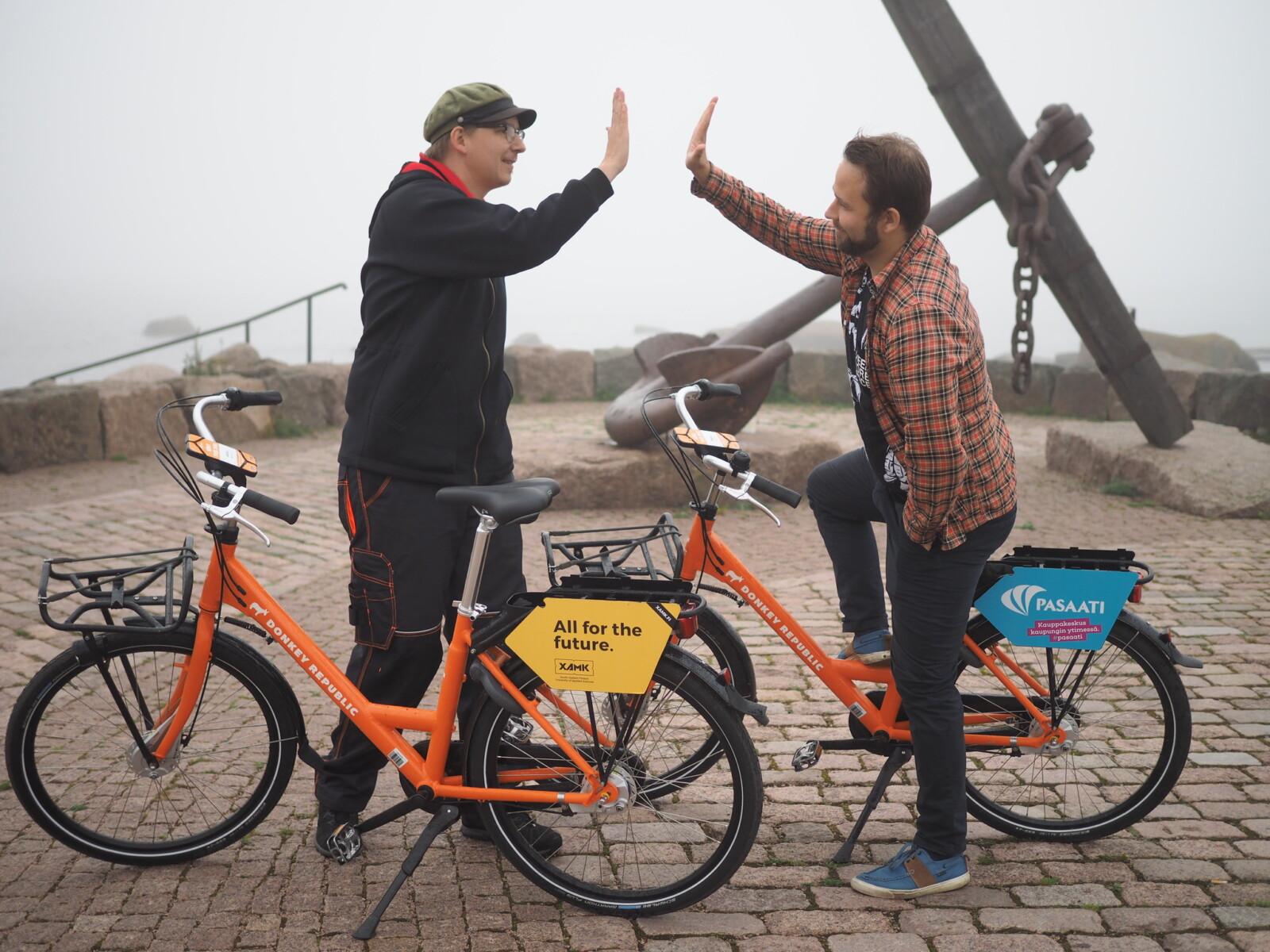
Planners and advocates travel to Copenhagen, Amsterdam and, more recently, Paris to see how cycling works there. Oulu in northern Finland has become a destination too, especially for people from cities with real winters. The assumption behind every study visit is simple: participants learn something and use it at home. Anika Koskela’s master’s thesis at Aalto University asked whether that actually happens.
👉 Anika Koskela: Evaluating learning outcomes from cycling-related study visits
She studied the Oulu Masterclass, a three-day course on year-round cycling organized with the Finnish Cycling Embassy, with two days in Oulu and one in Helsinki. She interviewed the hosts and nine past participants, most of them engineers and planners from the US and Canada.
Earlier research on study visits has mostly looked for tangible outcomes, such as whether a new bike lane appeared afterwards. Koskela looked at learning instead, and at how people’s view of cycling changed. Some of what participants took home was technical. One participant described how their view of snow storage changed:
“Before I went there, I thought it’s not our job necessarily to figure out what to do with the snow. That’s maintenance’s job. Then coming back, it was sort of like, oh, no, no, no, we need to plan for this.”
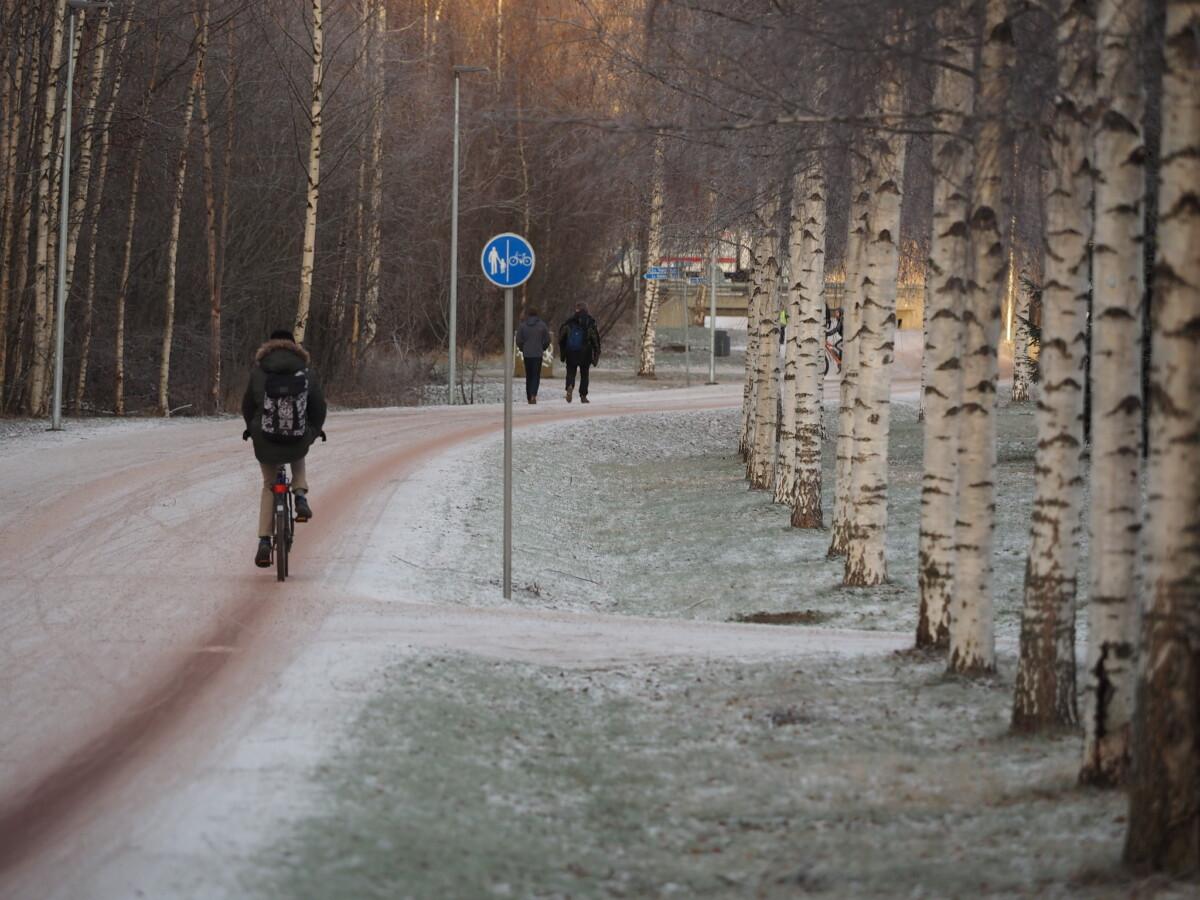
According to Koskela, participants have also begun bringing maintenance staff into the early design phase. Others changed how they see cycling itself. Riding on well-maintained snowy paths showed them that Finns are not a special breed of hardy cyclists. Cycling in winter has simply been made pleasant enough that ordinary people do it.
The finding that stayed with me was about who learns the most. Participants who already knew about Oulu mostly had their views confirmed. Those who arrived with little prior knowledge changed their thinking the most. Yet they are the least likely to sign up. In one city, maintenance staff had always been invited, but never had the time to go.
Then comes the hard part: going home. Participants returned to car-centric organizations where nothing had changed. They struggled to convince colleagues, decision-makers and the public. Koskela’s conclusion was that study visits clearly change individuals, but that the change rarely reaches the organization. Her recommendation was to put more weight on communication and help participants build the arguments they will need back home.
In Helsinki, change moved through networks
Lukas Junghanns, a doctoral researcher at Aalto University, borrowed the old Critical Mass slogan “We are not blocking traffic, we are traffic” and gave it a twist: “We are not blocking traffic planners – we are the traffic planners.” His question was whether the Critical Mass rides in Helsinki had any effect on how the city plans for cycling.
👉 Lukas Junghanns: We are not blocking traffic (planners) – we are the traffic (planners)!
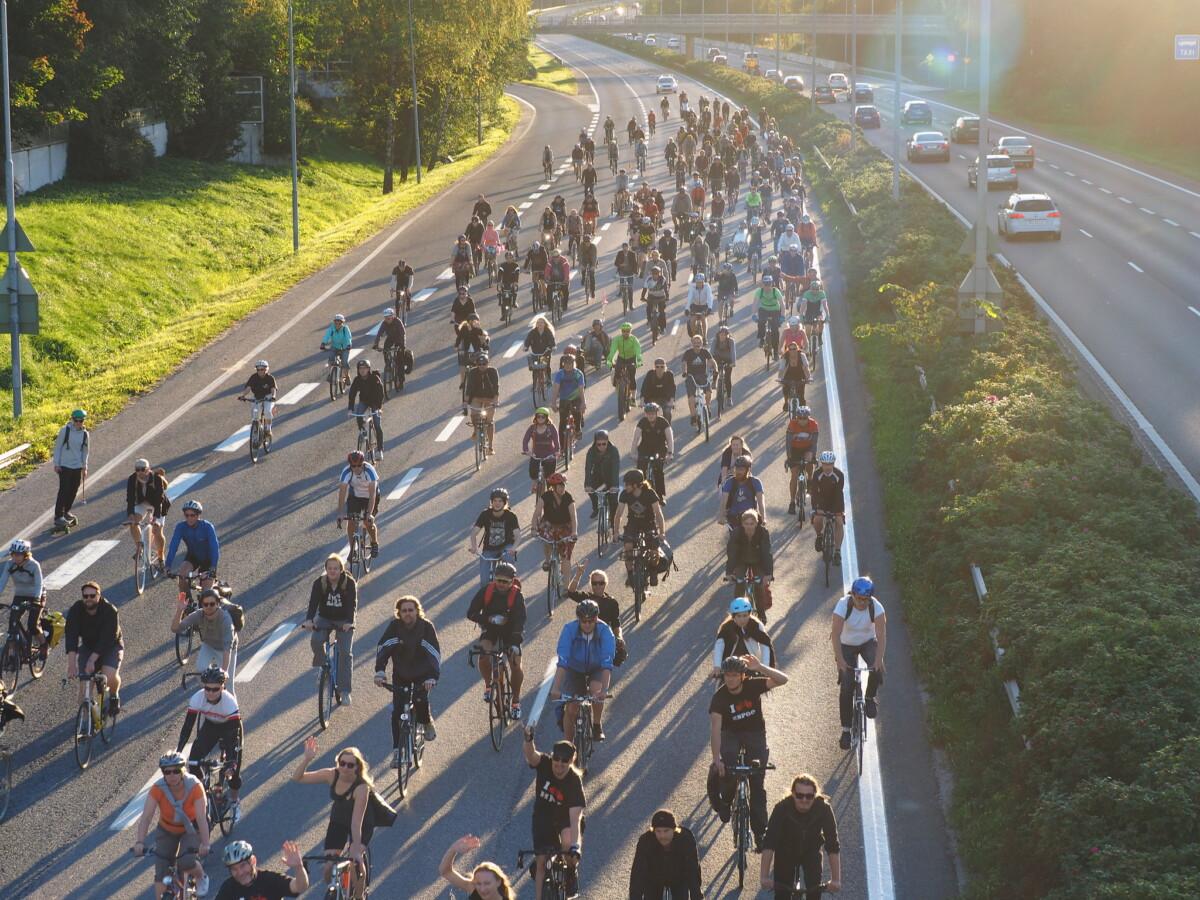
Some background for readers outside Finland. Helsinki urbanized late, which left plenty of room for car-centric planning in the post-war decades. Cycling was mostly put on paths shared with pedestrians, so that cars could move freely. Critical Mass rides in Helsinki go back to the 1980s, but they peaked between roughly 2010 and 2016, with monthly rides of 200–300 people. For Finland, where people are not quick to take to the streets, that is a lot. Routes were chosen to point out gaps in the network, and rides on urban motorways such as Länsiväylä got wide media attention. The same years saw a citizens’ petition for cycle lanes on Hämeentie, and in 2012 the city set up a dedicated cycling planning team.
Junghanns interviewed organizers, city planners and politicians. We usually picture planning as a one-way street: citizens elect politicians, and politicians instruct planners. In Helsinki it did not work like that. Organizers went into politics. Planners joined the rides to experience the streets as cyclists and spot flaws in the network themselves. Some of the people worked as city planners at the same time, and others later went into politics. Information and ideas moved through these connections, often outside official channels. Hence the title of his talk: the people on the bikes were, quite literally, also the traffic planners.
He was careful not to claim that the rides caused the changes. The impact came through chains of events: someone joins a ride, gets engaged, and a few years later ends up in a planning job or on a committee. The rides were also a place to meet people and build support networks. Few participants saw themselves as activists. They saw themselves as people who cycle.
I was writing about cycling in Helsinki and serving as a deputy city councillor in those years, so much of this story is familiar to me. What Junghanns’ research adds is a picture of how change actually moves in a consensus-minded Nordic city. Much of it happens through people who know each other. I would add one thing from my own experience. These networks did not form only by chance. Many of the key people working in the background knew network theory well and used it deliberately, thinking about who should meet whom and how ideas would travel. He ended with a question I keep thinking about: is this kind of direct action still needed in Helsinki, and how does it fit together with the advocacy work of organizations like ours? I don’t have a clear answer. But I suspect a city needs both, and that the people doing them should talk to each other more.
Oulu’s cycling culture was built by four generations of planners
Isabel Scherer, also a doctoral researcher at Aalto, has studied Oulu since her master’s thesis. Oulu, a city of about 200,000 people in northern Finland, is known as the winter cycling capital of the world. In most Finnish cities the number of cycling trips drops by around 80 percent in winter. In Oulu it drops by about half, and the city’s winter cycling share is as high as Helsinki’s summer share.
👉 Isabel Scherer: Cycling through time – How different generations of planners shaped Oulu’s cycling culture
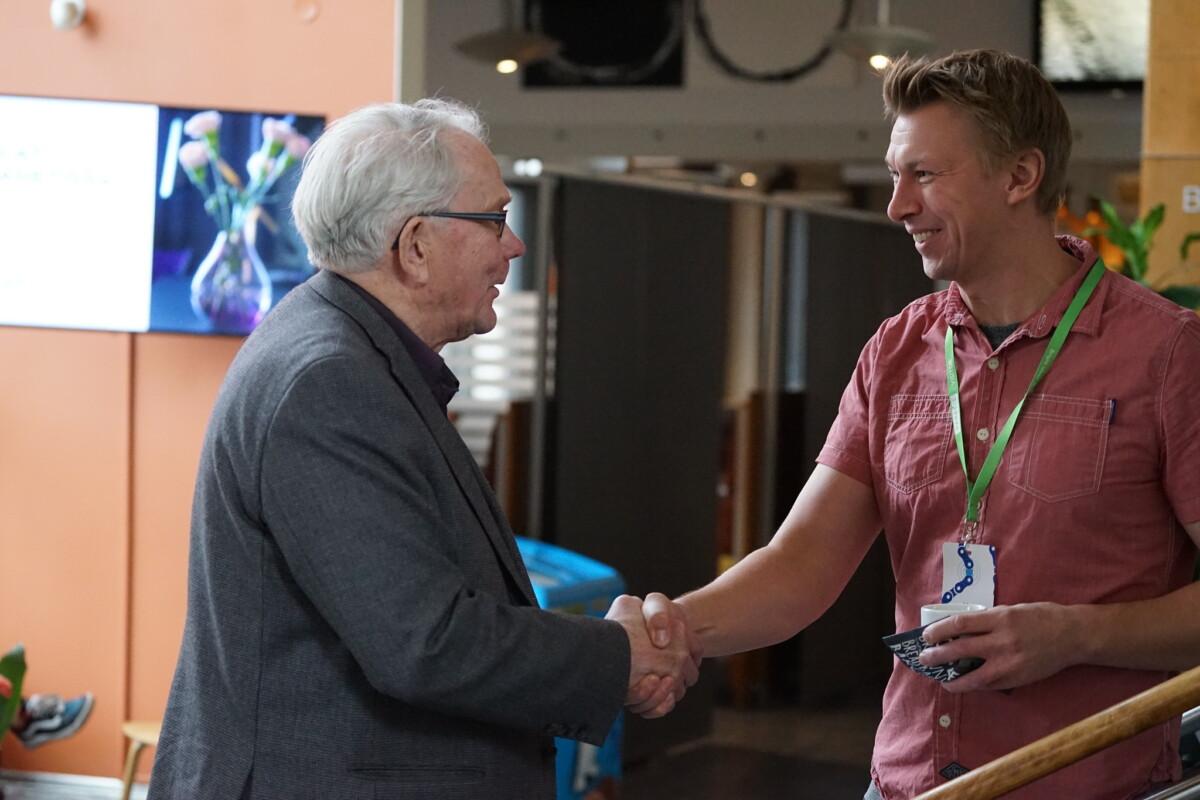
The usual explanation is good infrastructure and excellent maintenance. Oulu has separate maintenance contracts for roads and cycle paths, and the paths are cleared first. But Scherer’s interviews kept pointing to a person. Mauri Myllylä, now 92, became Oulu’s first traffic planner in the 1960s. He was sent to the US to learn highway planning and came back having seen what car-only planning does to cities. In 1972 he drew up Finland’s first walking and cycling strategy. One interviewee described him as “not really a cycling guy, just a traffic separation guy”. Because space for separate cycle paths was reserved back then, Oulu can now upgrade those routes into wider cycle highways. Myllylä was also good at finding arguments that worked. He got funding for cycling underpasses by pointing out that they could serve as bomb shelters.
One factor is less flattering. Public transport in Oulu is limited, so for many people the choice is between a car and a bike. When Scherer presented her findings to HSL, the Helsinki region’s transport authority, one reaction was:
“Ah, so we should do a worse job so that people cycle.” 😉
That was a joke, of course. But it shows how many different things shape whether people cycle, and how few of them are about cycle paths alone.
What I liked most about the talk was that it did not stop at the hero story. Scherer described Myllylä as “the enabler”. After him came a planner she calls “the allower”, who was not a driving force himself but let younger colleagues carry the work forward. Then came “the marketers”, who started the Winter Cycling Congress when the city doubted anyone would want to come to Oulu. Today’s “upgrader” is modernizing the network and spends a large share of his time on communication. Each generation brought something different, and each depended on the one before.
Her conclusions were that building a cycling culture takes decades, that it needs the right people and support for them, and that planners need both head and heart: technical skills, but also communication, persistence and the ability to build coalitions. Scherer also pointed out the risk in all this. If one person can change so much, it may mean that cycling is not built into the organization itself.
The point is not to copy Oulu. Anyone working on cycling in Helsinki has heard “we are not Oulu” (or Amsterdam, or Copenhagen, pick your example) used as a reason to do less. Scherer’s answer was that every city has to understand its own context and focus on what it can change. I would add one practical lesson from Myllylä’s story. Reserving space for cycling costs little when a street is first planned, and a great deal when it has to be taken back fifty years later. In Oulu, the paths reserved in the 1970s can now be widened into cycle highways without taking space from anyone. In most cities, the same space went to car lanes and parking decades ago, and getting it back means a new political fight on every street.
The common thread is people
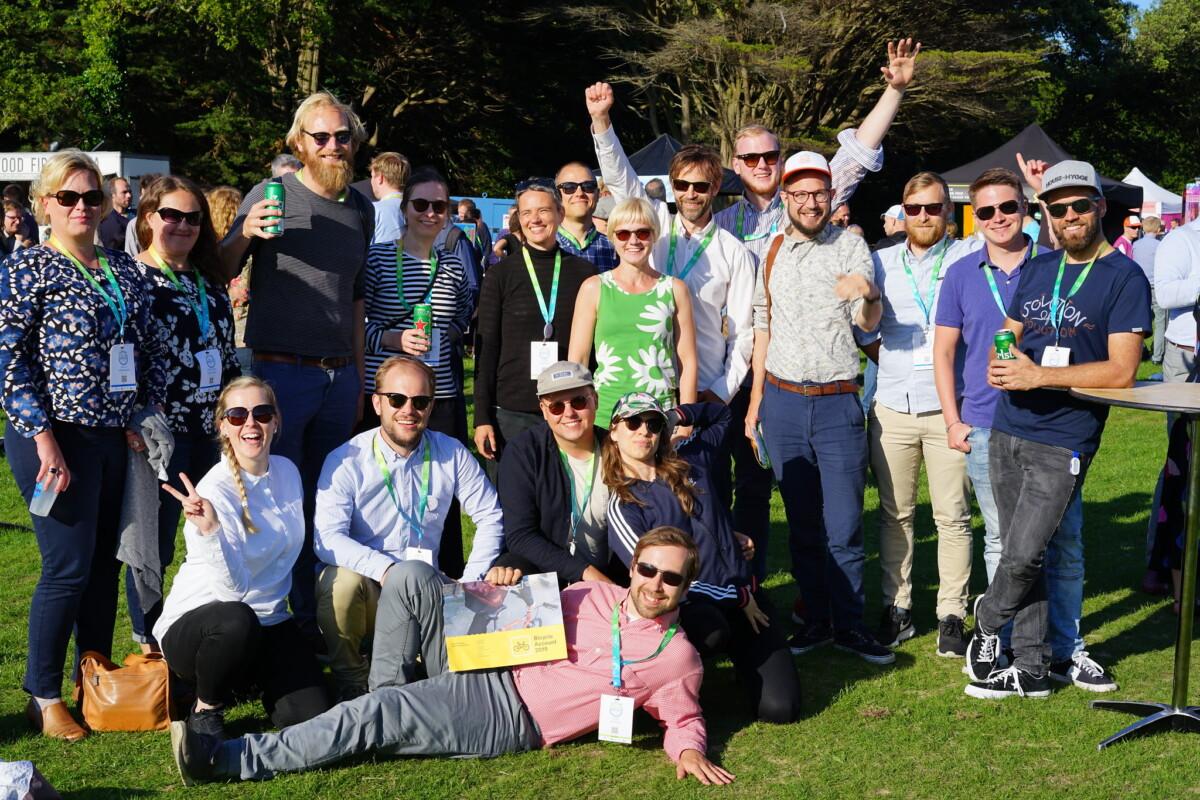
Looking at the three talks together, the common thread is people: how they learn and spread knowledge, ideas and best practices. All three also showed how people organize, mingle and network, and how they push change through organizations that often resist it.
Koskela showed that a study visit can change how an individual thinks, but that the change rarely spreads to the rest of the organization. Junghanns described how change in Helsinki moved through networks that connected riders, planners and politicians. Scherer showed that Oulu’s success rests on several generations of planners, each with different strengths.
This matters because the technical side of cycling planning is fairly well known by now. Design guidelines exist, good examples are a short trip away, and most cities could list what they should do. What varies is whether there are people inside the city who carry those ideas forward, and whether the organization supports them or wears them out.
For an advocacy organization like ours, this is a useful reminder. Good arguments and good examples are needed, but they are not enough on their own. Supporting those people, and helping them find each other, may be some of the most useful work we can do.
All three talks are available as recordings:
- Anika Koskela: Evaluating learning outcomes from cycling-related study visits
- Lukas Junghanns: We are not blocking traffic (planners) – we are the traffic (planners)!
- Isabel Scherer: Cycling through time – How different generations of planners shaped Oulu’s cycling culture
The rest of the series is in Finnish. You can find all the recordings on our website.
Martti Tulenheimo
Policy & Advocacy Manager, The Finnish Cyclists’ Federation